
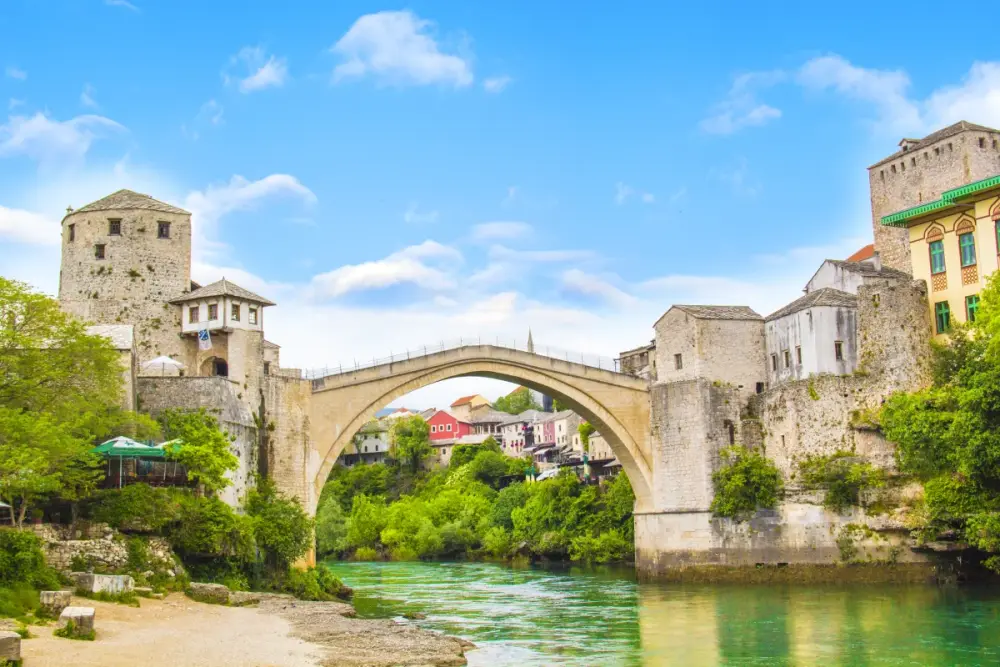
Stari Most — The Old Bridge
Built in 1566 under the reign of Suleiman the Magnificent, Stari Most is the defining symbol of Mostar and one of the finest examples of Ottoman architecture in the Balkans. Its single elegant arch spans 21 metres over the turquoise Neretva River, connecting the two historic quarters of the city.
The bridge was destroyed during the 1993 war and painstakingly rebuilt using original techniques and stone from the same quarry, reopening in 2004. It was inscribed as a UNESCO World Heritage Site in 2005 — recognised not only for its architectural beauty but as a symbol of international reconciliation.
Stroll the cobbled lanes of the Kujundžiluk bazaar, visit the Bridge Museum, or watch the famous tradition of bridge diving practised by the Mostar Diving Club since 1968. The surrounding old town is a labyrinth of mosques, hammams, and workshops.
- Best visited early morning to avoid crowds
- Combine with Mostar Old Town for a half-day
- Evening light is spectacular for photography
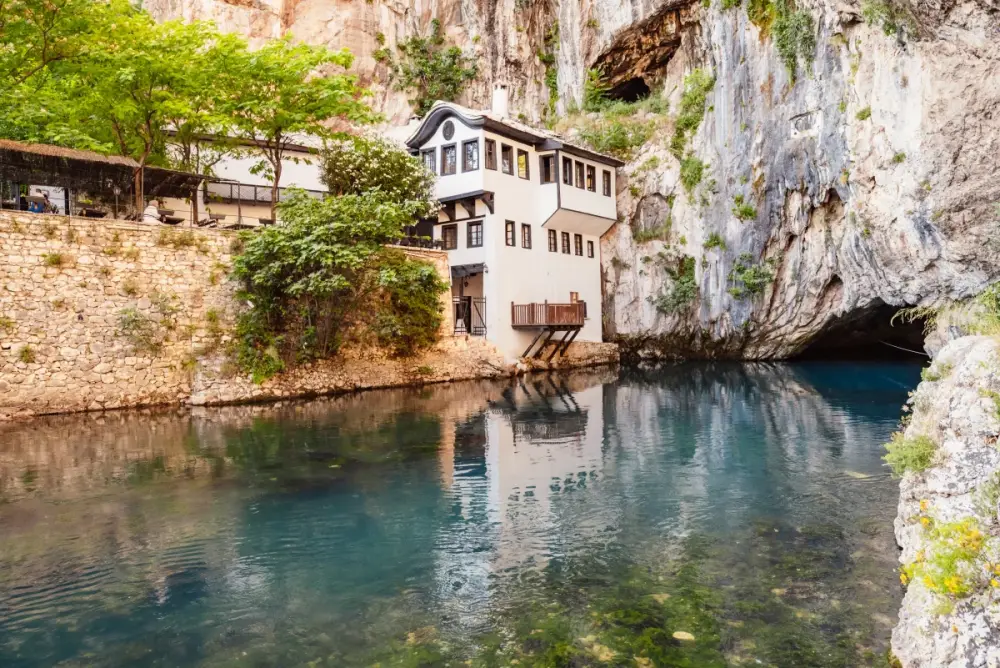
Blagaj Tekke & Buna River Spring
At the foot of a sheer 200-metre cliff, the Buna River erupts from underground with extraordinary force — one of the largest karst springs in Europe, releasing up to 43 cubic metres of water per second. The water is a striking shade of turquoise, ice cold even in midsummer.
Perched at the cliff's edge, the Blagaj Tekke is a 16th-century Dervish monastery that appears to grow organically from the rock. Built around 1520, it served as a centre of Sufi practice for centuries and remains an active religious site. Its whitewashed rooms, carved ceilings, and riverside terrace make it one of the most serene spots in Herzegovina.
The village of Blagaj itself dates back to medieval Herzegovinian rulers and was the seat of the Duke of Herzegovina, Stjepan Vukčić Kosača, in the 15th century.
- Restaurant terrace right on the water — perfect for lunch
- Easily combined with a Mostar visit
- Open year-round; most atmospheric in spring
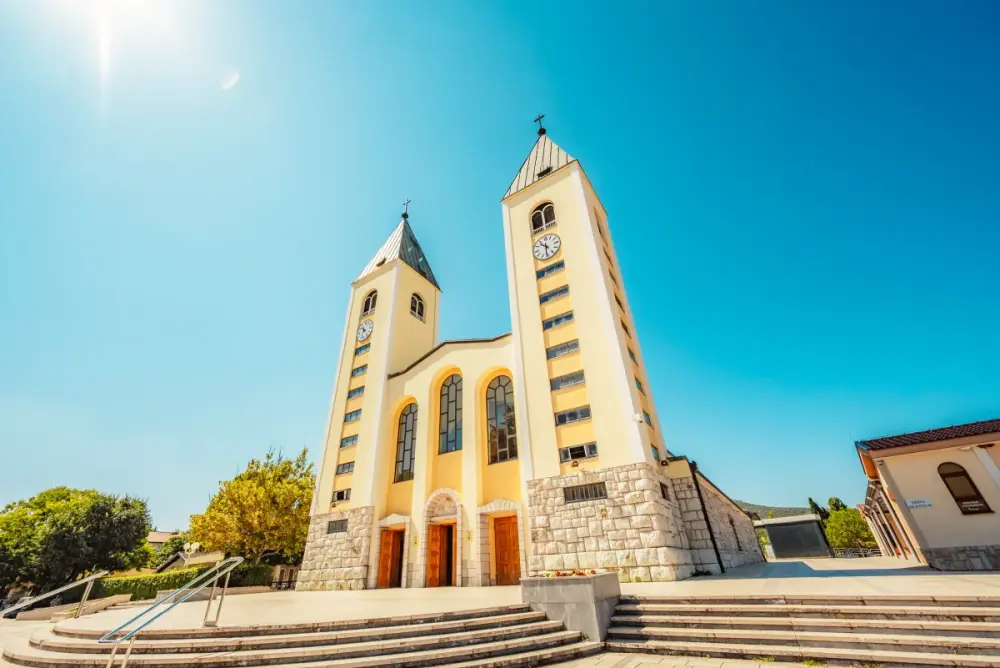
Međugorje
Since 1981, when six local children reported apparitions of the Virgin Mary on a rocky hillside, Međugorje has grown into one of the most visited Catholic pilgrimage destinations in the world. More than 40 million visitors from over 100 countries have made the journey — many returning year after year.
Apparition Hill (Podbrdo) and Cross Mountain (Križevac, 520 m) are the twin focal points of pilgrimage. The climb up Cross Mountain — with 14 bronze relief stations of the cross by sculptor Carmelo Puzzolo — takes around 90 minutes and rewards with sweeping views over the Neretva plain. Saint James Parish Church, consecrated in 1969, stands at the heart of the village and hosts multiple daily Masses in dozens of languages.
- Suitable for visitors of all faiths — the landscape alone is worth the visit
- Best visited on weekday mornings to avoid pilgrimage groups
- Numerous restaurants and local wine producers nearby
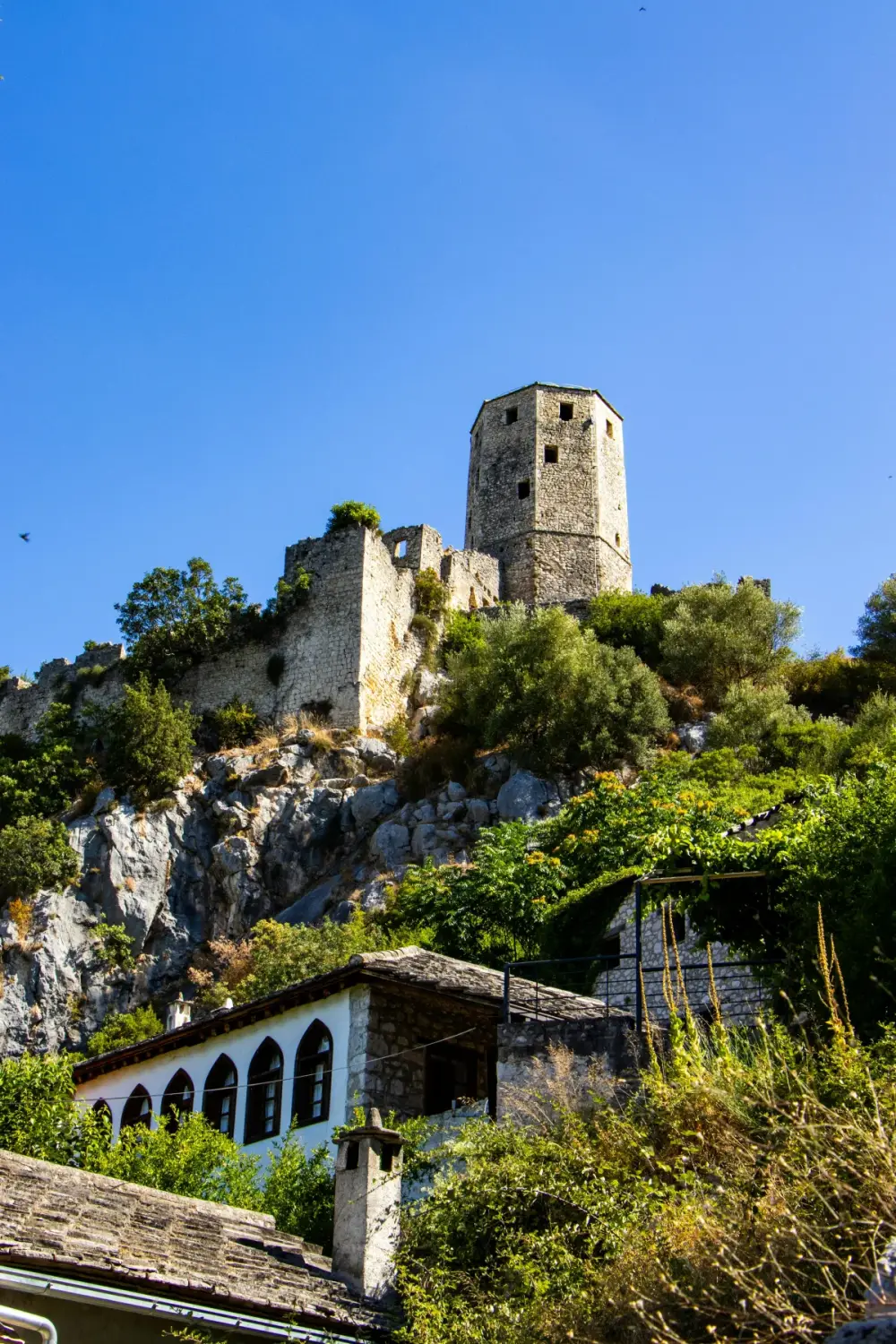
Počitelj Historic Village
Clinging to a steep limestone hillside above a bend in the Neretva River, Počitelj is one of the best-preserved examples of Ottoman urban architecture in the Balkans. The walled settlement cascades down from a 15th-century Citadel tower, its stone houses, mosques, and hammam layered organically into the rock.
The Šišman Ibrahim-pasha Mosque, built in 1563, is the centrepiece of the village — its hexagonal courtyard and ornate stonework surviving centuries largely intact. The Gavrankapetan Tower, the old Sahat-kula clock tower, and a restored hammam complete the ensemble. Artists have lived and worked here since the 1960s, drawn by the extraordinary quality of light and the stillness of the place.
Počitelj sits directly on the road to Kravice, making it an ideal paired half-day excursion from Villa Lapis.
- Stone steps throughout — wear comfortable shoes
- Combine with Kravice Waterfalls on the same day
- Several local artists sell work from studio workshops
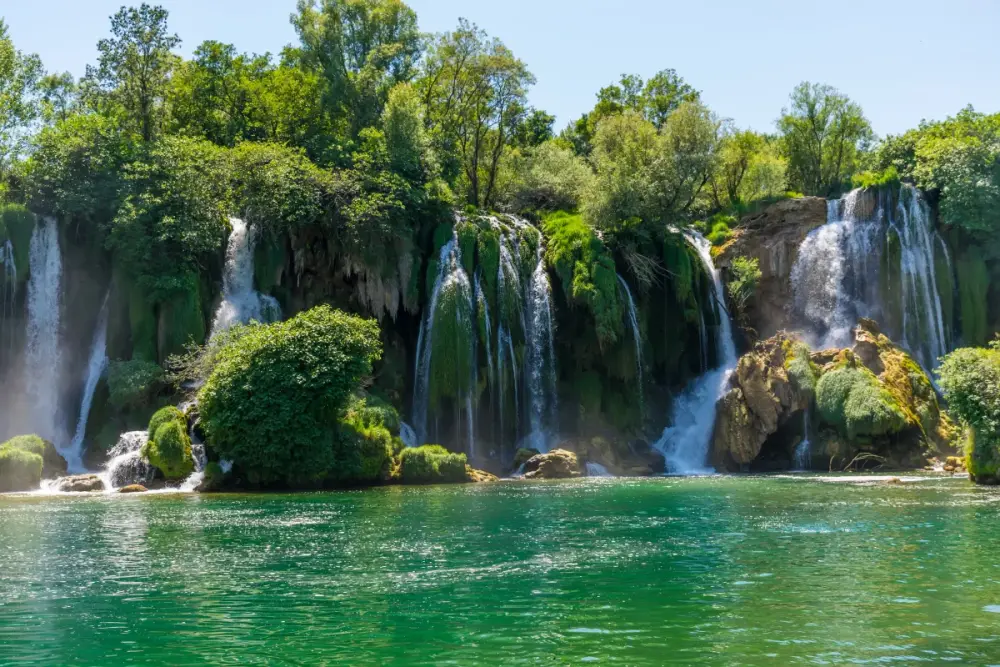
Kravice Waterfalls
Where the Trebižat River plunges 25 metres over a broad horseshoe of travertine rock, Kravice creates one of the most spectacular natural scenes in southeastern Europe. The basin below fills with emerald water, enclosed by lush canyon walls and dense Mediterranean vegetation — more Amazonian in feel than Balkan.
Swimming is permitted in the natural pool from late spring through early autumn. Small boats can be rented to paddle beneath the falls, and the spray on a hot summer's day is a relief unlike any other. The surrounding Trebižat area is a designated Nature Park, home to otters, rare fish species, and a rich bird life.
Kravice draws large crowds in July and August — an early morning arrival secures the best experience and the light on the water is unparalleled before 10am.
- Swimming available May to September
- Bring water shoes — the rocks are slippery
- Café and facilities on-site; entrance fee applies
- Pair with Počitelj for a full day out
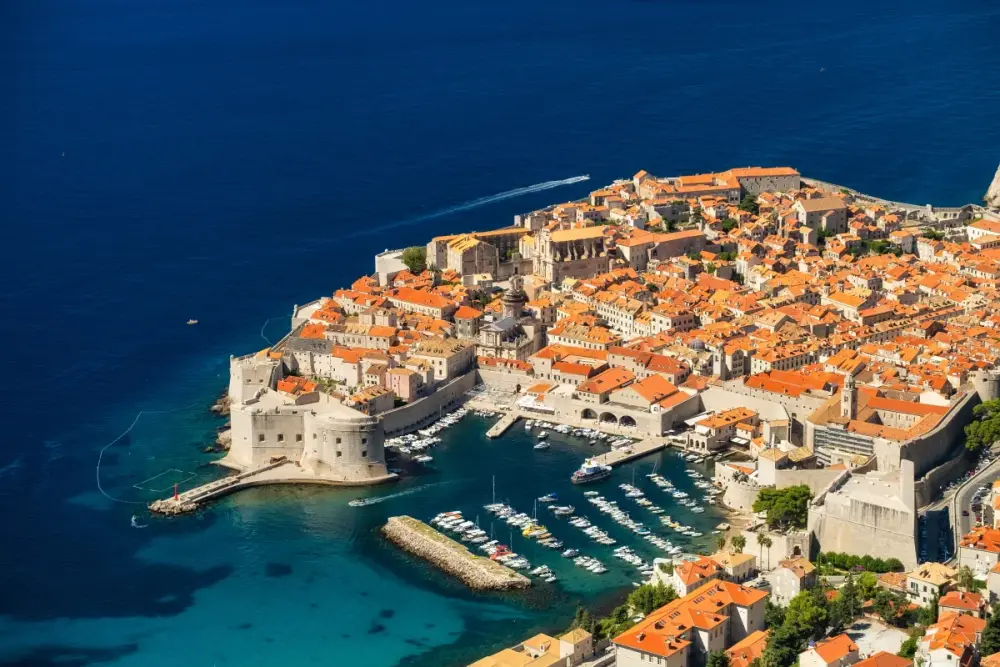
Dubrovnik
George Bernard Shaw wrote that "those who seek paradise on Earth should come to Dubrovnik." The Pearl of the Adriatic needs little introduction — its perfectly preserved medieval walls encircle one of Europe's most beautiful old cities, rising from the shimmering Dalmatian coast just 115 kilometres from Villa Lapis.
Walk the 2-kilometre circuit of the city walls for panoramic views over terracotta rooftops and the open Adriatic. Explore the marble-paved Stradun, duck into the Rupe Granary Museum, or take the cable car to Mount Srđ for a perspective over the entire bay. Fort Lovrijenac — "Dubrovnik's Gibraltar" — guards the western approach and hosts summer festival performances. Fans of Game of Thrones will recognise the city as the filming location for King's Landing.
- Day trip — depart by 8am, return by evening
- Peak summer crowds are intense — spring and autumn are ideal
- Dubrovnik Card covers walls, museums, and cable car
- Lokrum Island ferry runs from the old harbour
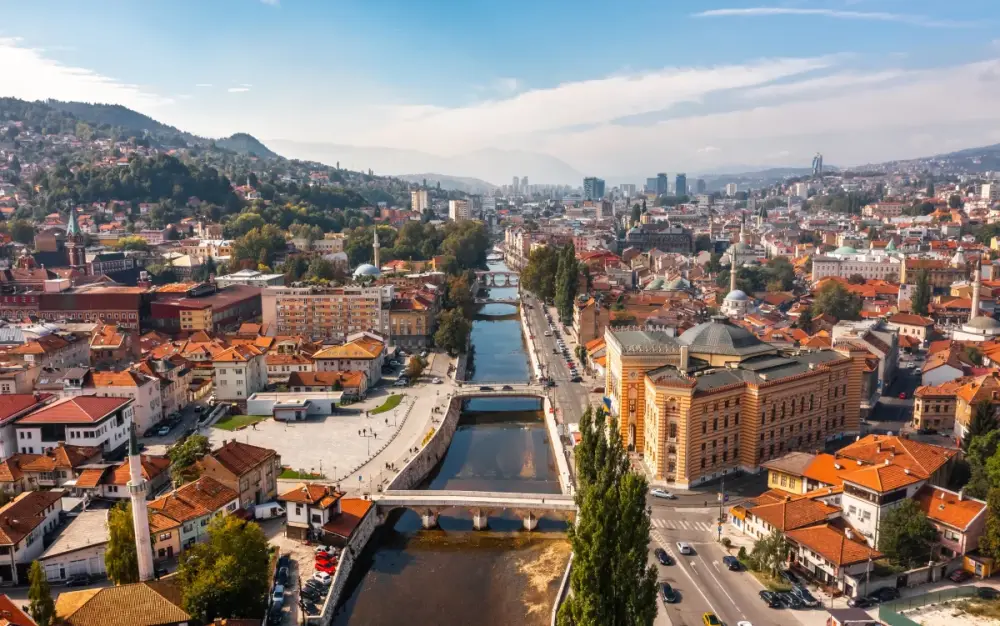
Sarajevo
Called the "Jerusalem of Europe" for the rare coexistence of mosques, Orthodox churches, Catholic cathedrals, and synagogues within a few hundred metres of each other, Sarajevo is a city of extraordinary depth. It is a place where East genuinely meets West — where the Ottoman Baščaršija bazaar transitions seamlessly into the Austro-Hungarian architecture of the central boulevard.
Stand on the Latin Bridge where Archduke Franz Ferdinand was assassinated on 28 June 1914 — the event that triggered the First World War. Visit the War Childhood Museum, one of the most quietly devastating exhibitions in the world. Ride the cable car to Mount Trebević, reopened after 30 years, for a view over the entire Sarajevo valley. End the day in Baščaršija with Bosnian coffee, ćevapi, and the sound of the evening call to prayer echoing off the stone.
- Allow a full day — there is far more to see than a half-day allows
- The Tunnel of Hope Museum is essential context for the 1990s siege
- Baščaršija restaurants are excellent and very affordable
- The drive through the Neretva canyon is scenic in its own right